
Fescue Sod in North Carolina
A practical guide for shaded yards, tree-lined properties, and high-traffic family lawns.
This guide explains when Fescue performs better than other options and how to install it for long-term success, not just through the first summer.
Is Fescue Right for Your Yard?
Fescue is the grass best suited for shade, mixed light, clay soils, and North Carolina homeowners willing to manage their yard through summer.
This guide covers: what Fescue sod is, why North Carolina is built for Tall Fescue, when to install and why, regional notes, how to care for it, where it fails, and how to protect it from NC heat.
Looking for a quicker overview with pricing? See our Tall Fescue product page for cost per square foot and a shorter FAQ.
What Fescue Sod Is (And Why It Works Here)
Fescue is a cool season turfgrass. It prefers moderate temperatures, filtered light, and root building weather, which matters in a state with tall tree canopy, clay heavy soils, and large mixed light subdivisions.
The backbone of most NC lawns. Deep, aggressive rooting potential, thick hardy blades, strong wear tolerance, and better disease resistance than fine fescues. Mowing height 3.5–4 inches.
Who it is for: backyards with trees, families, dogs, traffic, and shade.
Narrow blades, softer look, higher shade tolerance. Struggles with heat stress, humidity related disease, and thinning or die off by mid to late summer.
Who it is for: low traffic lawns.
Tall Fescue vs Fine Fescue in North Carolina
Both are cool season grasses. Only one can survive North Carolina summers.
- Root Depth - Tall Fescue develops deeper roots, giving it access to moisture during heat and drought. Fine Fescue stays shallow and stresses quickly when topsoil dries out.
- Traffic Tolerance - Tall Fescue handles wear. Fine Fescue does not recover well from repeated foot or pet traffic.
- Shade Reality - Fine Fescue tolerates shade in cooler climates, but in NC heat and humidity, dense shade often leads to thinning and disease. Tall Fescue performs more reliably in filtered and afternoon shade.
- Summer Survival - Fine Fescue often looks great in spring, then collapses by late summer. Tall Fescue, installed and maintained correctly, holds through July and August.
Bottom line: in North Carolina, Tall Fescue is the primary lawn grass. Fine Fescue is a supplemental option, not a standalone solution for most yards.
Why North Carolina Is Built for Tall Fescue
Hot humid summers, cool winters with occasional freezes, and wide temperature swings across seasons. Tall Fescue tolerates both heat and cold better than most turf options and stays green through winter, unlike warm season grasses that go dormant and brown.
Fescue's strongest growth happens in fall and early spring, the two most predictable, moderate weather windows in the state. That lets it establish deep roots before summer and recover from wear without extreme inputs.
Tall Fescue develops a much deeper root system than many alternatives, which matters when summer heat stresses shallow rooted lawns, rainfall is inconsistent, and clay soils dry and crack on the surface.
Tall Fescue tolerates heavier soils better than most grasses and establishes reliably with sod when prep is done correctly. Warm season grasses often struggle with drainage in clay unless the soil is reworked.
Fescue stays green through winter, so lawns look alive during colder months when many warm season lawns are dormant. That year round color is a big reason homeowners and HOAs prefer it.
From Raleigh to Charlotte to the Triad, Tall Fescue has decades of performance data. Landscapers, sod farms, and turf managers know when to install it, how to maintain it, and what problems to anticipate.
North Carolina is not ideal for either extreme, fully cool season or fully warm season turf. Tall Fescue succeeds because it lives comfortably in the middle: resilient in heat, tolerant of cold, compatible with clay soils, and consistently green year round.
When to Install Fescue Sod in North Carolina
September through February is the elite window. March and April are acceptable with active management. May through August should be avoided.
The perfect mix: cooler air, warm soil, seasonal rainfall, and low disease pressure. Root establishment happens faster. Fescue installed in fall has months to anchor itself before the heat returns.
Most homeowners assume grass stops growing, but roots stay active long after leaves go dormant. You water less, mow less, skip spring panic, and your lawn meets summer with maturity.
- Best for yards with filtered or partial shade
- Requires consistent irrigation
- Carries fungus risk as temperatures rise
New Fescue plus NC summer means daytime heat, nighttime humidity, fungus pressure, water cost, patch failure, and homeowner regret. Peak Sodding only installs Fescue in summer with a signed risk waiver.
"Homeowners are shocked when we recommend winter installs, but roots do not care about air temperature. They care about soil temperature. December Fescue lawns can thrive."
Ben Schneider, Owner, Peak SoddingUnderstanding Shade (This Is Why You Choose Fescue)
Light through leaves, dappled sun. Fescue thrives here.
East facing backyards behind fences or structures. Very strong performance.
West facing lots behind homes or trees. Fescue tends to perform more reliably than most alternatives here.
Fescue is not magic. Under 3.5 hours of uninterrupted light, the better move is artificial turf, hardscape, groundcover, pine straw, or decorative rock.
"We walk properties with a geo located sun tracking tool because homeowners often misjudge their shade. Three oak trees does not automatically mean full shade. Timing and canopy density matter more than tree count."
Curtis Morey, Sales Manager, Peak SoddingRegional Climates
A perfect climate match: filtered shade, clay soils, mature trees, and mixed light neighborhoods.
Fescue thrives. Less humidity means lower fungus risk.
Works, but humidity, salt, and wind require careful watering, annual overseeding, and a proven installer.
Caring for a Fescue Lawn
- Mowing Height - 3.5 to 4 inches. Shorter destroys the crown and invites heat kill.
- Watering - Consistent during rooting, defensive through summer, minimal once dormant. Green perfection is not the goal in August; survival with minimal loss is.
- Fertilization - Consistent during rooting, defensive through summer, minimal once dormant. Fall feed is life insurance. Spring feed is appearance only.
- Overseeding - Annual overseeding is normal in NC and keeps density up year after year.
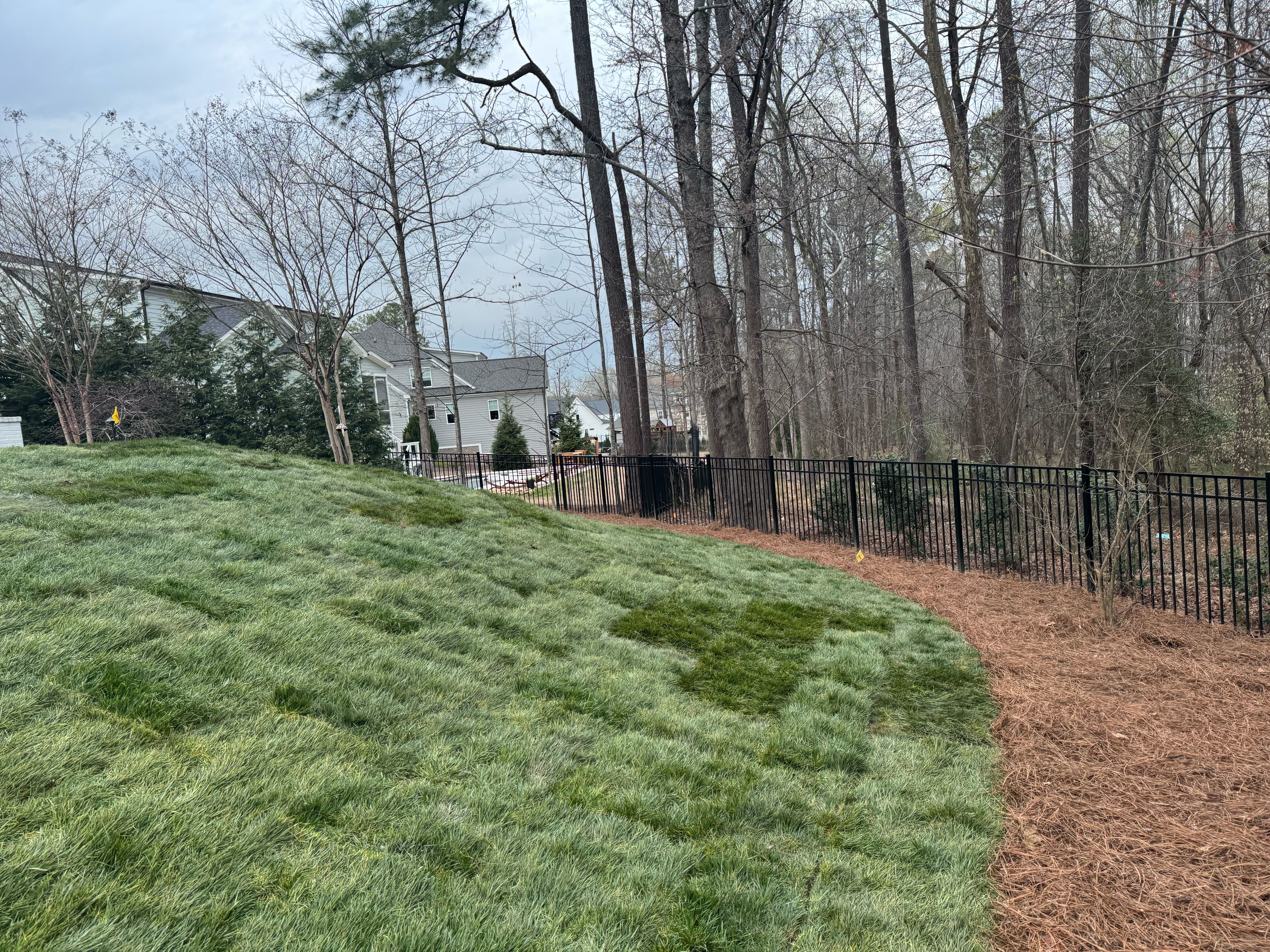
Fescue vs Warm Season Grasses in NC
If your yard gets six or more hours of direct sun every day with zero canopy, choose a warm season grass. Everyone else, Fescue is the better fit.
| Attribute | Fescue | Zoysia | Bermuda |
|---|---|---|---|
| Shade | Best | Poor to Medium | Worst |
| Heat | Medium | Strong | Very Strong |
| Winter Appearance | Green | Brown | Brown |
| Traffic | Medium | Medium | High |
| Recovery | Overseed | Slow | Aggressive |
| Maintenance | High | High | High |
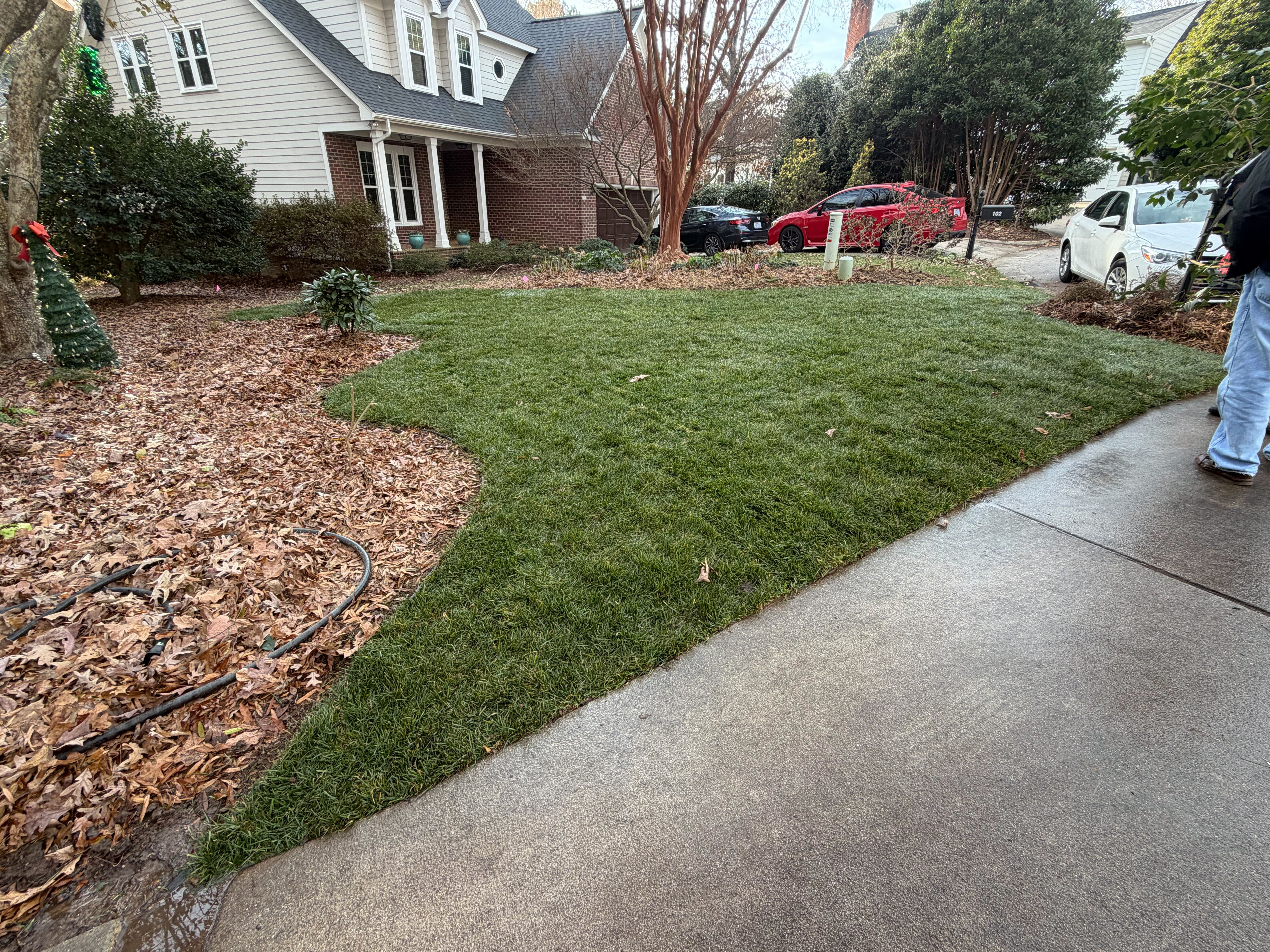
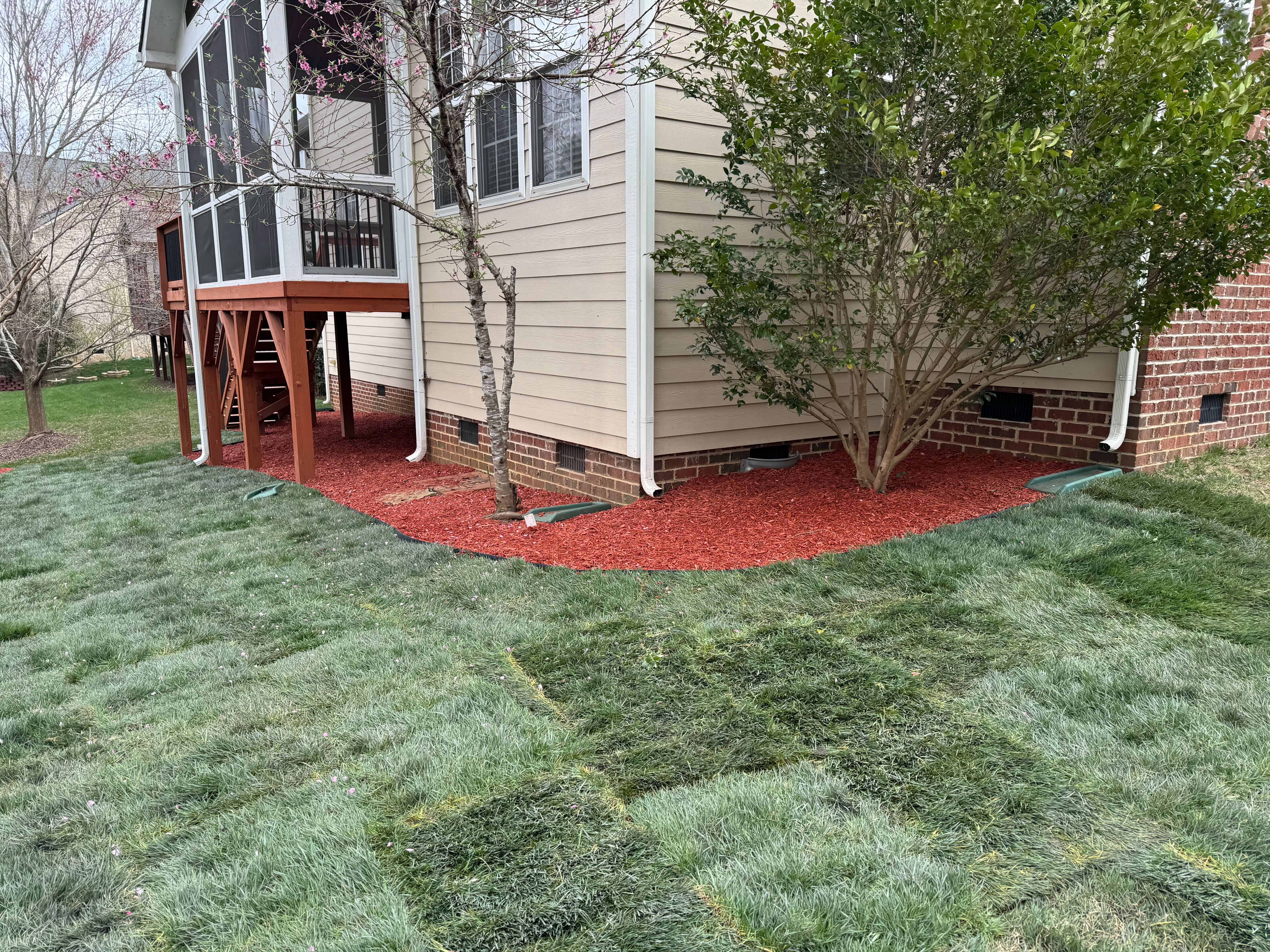
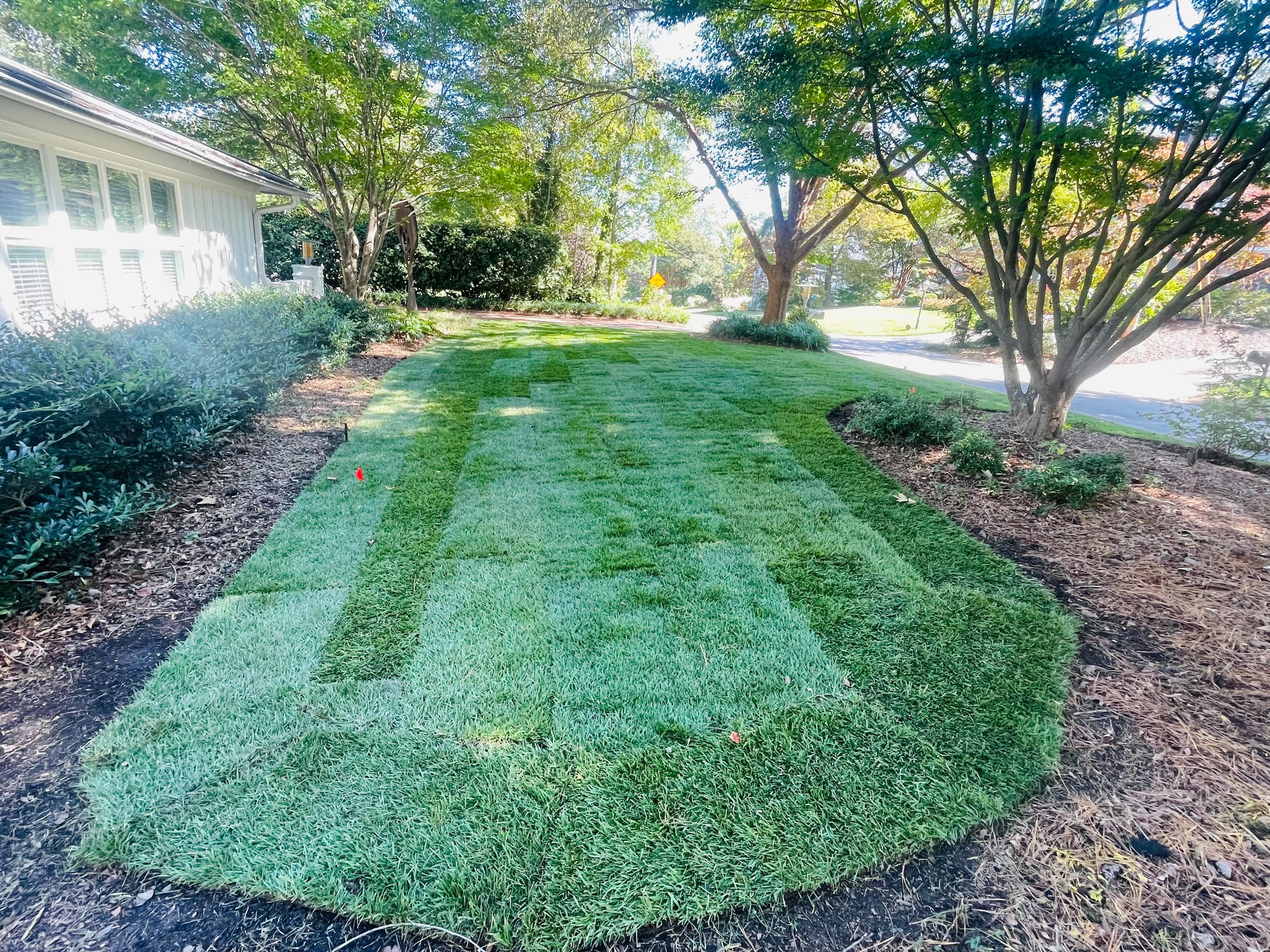
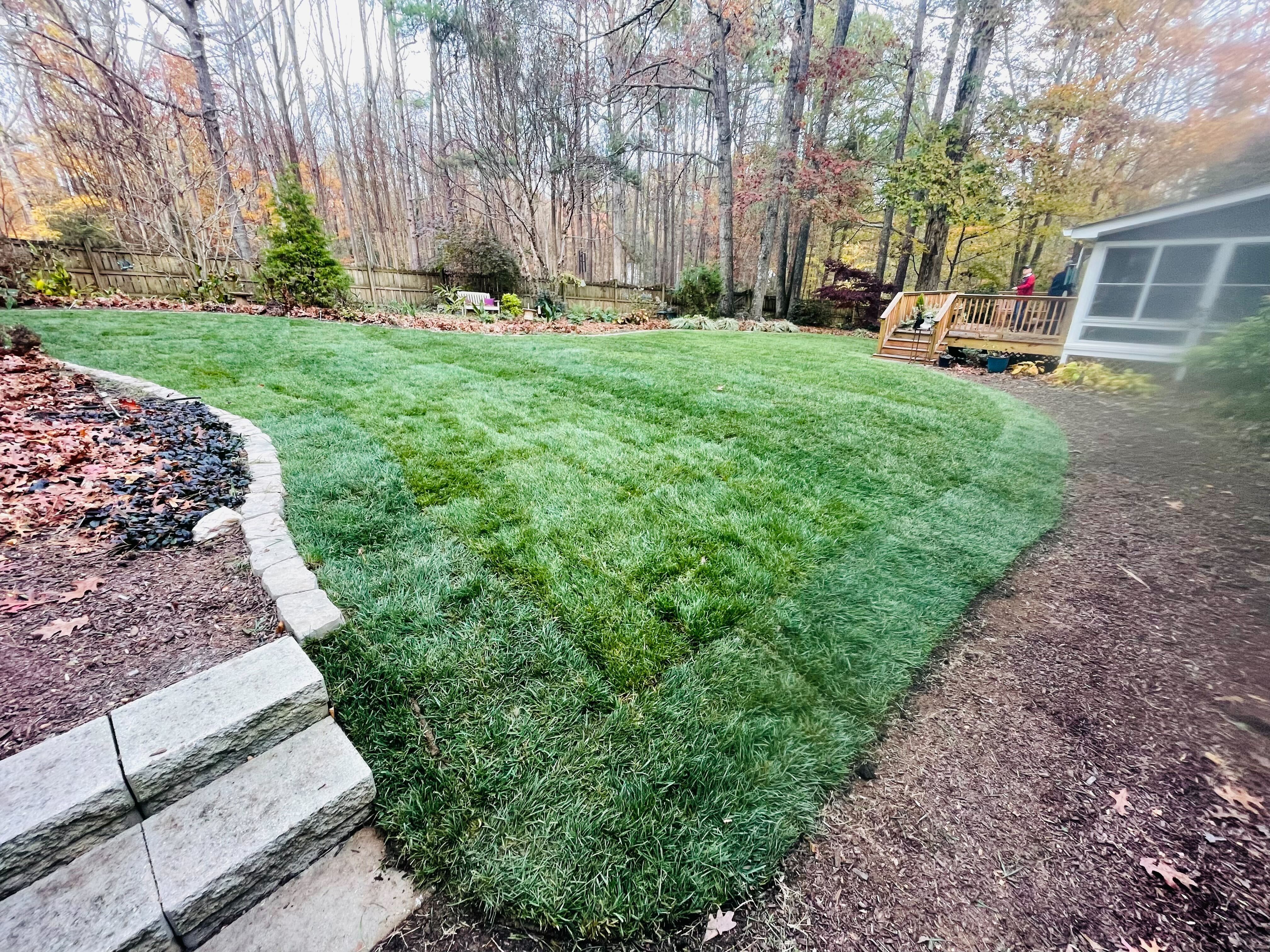
Fescue Installations Across Wake County
FAQs About Fescue Sod
Yes. Unlike warm season sods that go dormant and brown, Tall Fescue retains active green foliage through winter.
Initial rooting takes 10 to 14 days. Full establishment takes 6 to 8 weeks, depending on soil and season.
Yes, especially in shaded or mixed light yards. Fall is still superior and winter is still strong, but spring works with water discipline.
That is exactly what Fescue is built for. If it is full shade, no grass will work long term, and we will recommend alternatives.
Trees, canopy, clay soils, and afternoon shade. Bermuda and Zoysia simply cannot handle these conditions long term.
Give Your Yard Its Best Shot
If your property has shade, pines, mature oaks, or afternoon shadows, Fescue gives you the best chance of success, with the understanding that it requires active management, especially in summer.
Choose the right install window, mow correctly, and water with purpose. Peak Sodding installs Fescue lawns built to survive the whole North Carolina year, not just look good on install day.
Want the quick version instead? See our Tall Fescue product page for cost per square foot and a shorter overview.
Tell us about your yard and we will confirm Fescue is the right fit before anything is scheduled.
Let Peak Sodding Install Your Fescue Lawn
Schedule a yard assessment and we will confirm Fescue is the right call, then handle sourcing, timing, and installation from there.